My Founder Syndrome
Why hanging on can hold us back and letting go can be a win-win-win

When we feel responsible for something, letting go can be so hard, even when we know it’s the right thing to do. The good news is that, more often than not, letting go leads to growth, for those around us and even for ourselves.
My house
24 years ago, I had the opportunity to take a year off and work with an architect and builder to build a house for our family. I thought about how we lived, what our kids (13 and 10 at the time) needed and what we could and couldn’t afford. I must admit I was very proud of the details and thought that went into the project, even the placement of outlets and lighting to fit with our artwork and the furniture we intended to keep.
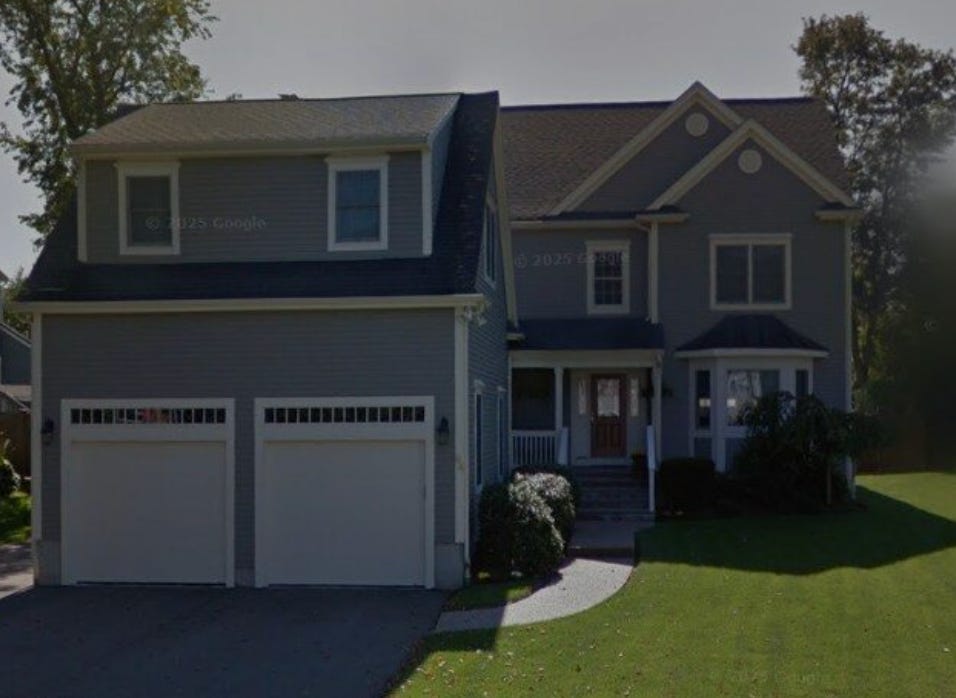
We lived in that house for almost 20 years and, while our children no longer lived there and used all the things we had included with them in mind, I still felt very proud of our house, although maintaining it felt like more and more of a chore as time went on. For instance, the pool, which was endless fun for our kids and their friends while in high school, got limited use when it was my wife and me, but still needed regular cleaning in the fall and draining in the winter. I must admit there were a couple of things that I started to think I might have done differently but I didn’t really have the energy or will to change them, so we lived with them.
Nevertheless, when, a year into Covid, my wife was looking for a new house for our son and announced that she had the perfect place for us to downsize to, my immediate reaction was horror at the idea of leaving the home that I had built. How could I leave? Would anyone else care about our home the way that I did and appreciate all of the details that went into it? What would happen to all these things we had grown accustomed to and that our kids expected to be there when they returned for the holidays?
The Move
My wife’s judgement was hard to argue with. The place she had found would have everything the two of us needed, including a place for our kids to stay during the holidays, and nothing we really didn’t need or would rarely use. It would be much easier to take care of. And it was also in a bigger town where I might meet new people and have more choices of shops, restaurants and even places to walk. So, I acquiesced, which of course meant planning a move – in short order!
That’s when the real estate consultants who were going to stage the house for sale, added insult to injury by telling us that buyers would be looking for a more modern décor, and much of our furniture had to go or at least be hidden for the open house. So we started to get rid of things, mostly by giving them away. Those first few trips to Savers were emotional since I valued these items and I was worried that they might not get used by someone else. It was also painful to hear our kids tell us that they did not want our stuff, even though we had been saving many items for them for years.
As time went on however, these valuables just started to become stuff, and shedding them progressively became easier. And, while the staged house looked different, (actually I felt I was living in Crate and Barrel) I could see the appeal. I am sure those of you who watch Love It or List It on HGTV will appreciate today’s open-concept trend.
Awakening
The good news is that the house sold quickly (everything did during Covid) although we were told by the agent that the buyers loved the house but had a number of things they wanted to change. “How could that possibly be” I remember thinking – it’s perfect – for us. Apparently not for them, I guess. They had much younger kids with different needs.
Over the last few years, I hear they have made quite a few changes! I actually drove by at Christmas time and the whole house, now a different color, was lit up beautifully. Moreover the Zillow value has gone up 30%. Why couldn’t I think of those improvements?
Founder’s Syndrome
Looking at this series of events, I realize that I had the equivalent of Founder’s Syndrome in the nonprofit world. I built something to serve our family, not just me. It was perfect for a point in time but as things changed, the house did not. and as warts started to appear, it was hard to adapt because the house had always been that way. When it was time for a change, times had changed and the needs and tastes of the next participants were different from our needs. We were not going to find a buyer who looked at things the same way we did – nor did we need to. The framework was strong enough to support whatever direction the new owners wanted to take it in, but it took the real estate agents, our transition consultants, to help us see that perhaps there were other ways of looking at the house that would make it more appealing and more functional for its new owners so they could see its potential and ultimately make it serve their own purpose.
A New Beginning
4 years on, not only have we enjoyed our new home (which, by the way, is decorated like Crate and Barrel) but we’ve found new interests in our new town, met new friends, and found new walking paths. And the knowledge that the owners of our prior house made changes that made it their own, was actually a relief. I no longer lose sleep feeling responsible for any of those warts, and I am sure the new owners cherish THEIR place as much as we once did.

Founders and long-time leaders worry what will happen when they leave an organization, both to the organization and to themselves. In reality, if one has built a good infrastructure (people and processes that make the day-to-day work in support of the mission), not only will the place survive but, with fresh eyes that can build on the foundation, there might be possibilities far beyond the founder’s vision. If the foundation is not that solid, which is typically the result of a leader taking on too much themselves and acting as the cornerstone of the organization, then the organization needs the equivalent of the real estate agent to evaluate and spruce up what the organization has to offer (its people and processes…).
Getting to What’s Next
In some cases, a transition consultant can help a long-time leader shed the weight of being the cornerstone and can help them unburden the responsibility of supporting the organization by effectively using available talent and instituting sustainable processes. This takes both a mind-shift and time, but many leaders not only are capable of doing this, but also find it to be quite freeing.
For those who can’t see things differently, the best solution is interim leadership – putting a professional in to objectively assess, and then more effectively leverage, the talent and processes that exist or, in their absence, to put those pieces in place. Without an interim leader, the data suggests that the next leader will be an accidental interim and will be unlikely to last more than about 18 months.
Either of these approaches to transitions will, like staging a house, enable the organization to attract and support a new leader with a vision for the future needs of the community being served. With such a foundation, a new leader can then make the organization their own and, hopefully, exceed any expectations the founder might have had.
Legacy
As for founders themselves, they can still look with pride at the organization they have built and hopefully celebrate the ways in which their foundational work is leading to something even greater. Moreover, they will find new paths to explore, new people to meet, new ways to use their talent and energy, and far fewer sleepless nights to endure.
Founders and long-term leaders need to trust that all their good work can lead to even greater things, for them and for the organization they have nurtured. By stepping away, they allow others to step up and take responsibility for ensuring that the organization continues to achieve its mission and thrive.
Thanks for reading! Subscribe for free to receive new posts, and please share my work.
Is your nonprofit experiencing challenges
Capitalizing on the pivotal opportunity that leadership transitions offer, Interim Executive Solutions (IES) strengthens nonprofits by placing and supporting experienced leaders who work inside organizations to provide confidence, reduce stress and take action that prepares the organization to thrive. Our core values are:
Inquisitiveness: uncovering and prioritizing organizational needs and capabilities
Inclusiveness: embracing the power of diverse perspectives, experiences and orientations
Transparency: gathering and sharing factual information to improve operations
Collective Action: building the capacity of team-members to sustainably achieve the mission

To learn more about interim leadership
See why nonprofits regret skipping an interim leader
Reach out to Interim Executive Solutions for a free consultation
Subscribe to Rethinking Nonprofits
Thanks for reading! Subscribe for free to receive new posts and support my work.
About the author:
I lead Interim Executive Solutions, a national organization exclusively dedicated to placing and supporting professional interim leaders for nonprofits in order to get nonprofits to what’s next. https://www.linkedin.com/in/dcharris/
This house analogy landed hard. What we build is often perfect for a season. The real test is whether the system can evolve without our hands on every lever 🤝
Wonderful story David. Great that the Founder had a wonderful and forward thinking Chief Operating Officer (your wife!)